Benefits of Aeration Systems for Florida Lakes and Ponds
Updated: May 13
If you manage a lake or pond in Florida, you already know the struggle. One month the water looks great, and the next you are dealing with algae blooms, fish stress, bad odors, or murky water that never seems to clear.
A big reason this happens is simple: Florida’s heat and long growing season put a constant load on pond water. Warm water holds less dissolved oxygen, storms can wash in nutrients, and organic muck builds up fast. Over time, many waterbodies end up with poor circulation and low oxygen zones, especially near the bottom.
That is exactly where aeration systems help. A well-designed aeration setup keeps water moving, increases oxygen levels, and supports a healthier pond ecosystem year-round.
Below, I will break down the real-world benefits of aeration for Florida lakes and ponds, what problems it solves, and what to consider before installing one.
What an aeration system actually does (in plain English)
Aeration is about adding oxygen to the water and improving circulation.
Most lake and pond aeration systems do this by:
Mixing the water column so the surface and bottom do not act like separate layers
Raising dissolved oxygen (DO) levels, especially where fish and beneficial microbes need it
Reducing stagnant zones that tend to smell, build muck, and fuel algae
In Florida, these benefits matter even more because the water is warm for much of the year, and warm water naturally carries less oxygen.
1) Healthier fish and fewer fish kills
Fish kills are one of the most frustrating events for pond and lake owners. In Florida, they often happen when dissolved oxygen drops suddenly, usually during:
Very hot, still weather
Cloudy stretches (less photosynthesis from plants and algae)
After storms stir up bottom water or cause runoff
When algae blooms crash and decompose quickly
Aeration helps stabilize oxygen levels so the system is less likely to swing from “fine” to “emergency” overnight.
With better oxygen distribution, fish have more usable habitat. Instead of being forced to the very top layer of water, they can spread out. That reduces stress and supports better growth and survival for sportfish and forage fish alike.
2) Less algae pressure over time (and fewer ugly blooms)
Aeration is not a magic “algae killer,” and anyone promising that is overselling it. But aeration can absolutely reduce algae pressure by changing the conditions algae loves.
Here is how it helps:
Fewer stagnant areas: Algae often thrives in still, warm, nutrient-rich water.
Less internal nutrient recycling: Low-oxygen bottoms can release phosphorus from sediments. Aeration improves oxygen near the bottom, which can reduce this nutrient release in many ponds.
Supports beneficial biology: Aerobic (oxygen-loving) bacteria break down organic material more efficiently, which can reduce available nutrients over time.
In Florida lakes and ponds, algae issues often come from a combination of nutrient inputs (fertilizer runoff, grass clippings, waterfowl, septic influence) and warm temperatures. Aeration addresses the oxygen and circulation side of that equation, which is a big deal for long-term stability.
3) Reduced muck and organic sludge buildup
That thick “muck” at the bottom of many Florida ponds is more than just gross. It is a nutrient bank. It fuels algae, smells bad, and can make shallow edges worse every year.
Aeration supports aerobic decomposition, meaning organic matter breaks down more completely when oxygen is available. Over time, this can help slow muck accumulation and, in some cases, gradually reduce it.
This is especially helpful in Florida where:
Leaves and grass grow and fall year-round in many areas
Storms wash in organic debris
Warm temps speed up biological activity and decay
You still need realistic expectations. If a pond has decades of accumulated sediment, aeration helps, but it may not replace dredging if depth has already been lost. Think of aeration as a long-term foundation that reduces the rate of future buildup and improves how the pond processes organics.
4) Better overall water clarity and appearance
When a pond is stagnant, fine particles stay suspended longer, and the water can look cloudy or “soupy.” Aeration improves circulation patterns and helps the pond function more like a balanced system.
With improved oxygen and healthier microbial activity, you often see:
Less odor and that “swampy” smell near shore
Fewer surface scums in calm corners
A cleaner look overall, especially during hot months
Water clarity is influenced by a lot of factors, including clay turbidity, algae density, and shoreline disturbance. But aeration is one of the most consistent “base improvements” you can make because it supports the whole biology of the pond.
5) Fewer odors, especially the rotten-egg smell
That rotten-egg odor is usually hydrogen sulfide, which forms under low-oxygen (anaerobic) conditions. Anaerobic decomposition is what happens when the bottom of the pond is essentially “out of breath.”
Aeration helps push oxygen down into deeper water, reducing anaerobic zones and the gases they produce. For communities and homeowners, this is often one of the most noticeable benefits because it directly affects how enjoyable the pond is to be around.
6) More usable pond volume and more stable temperatures
Many Florida ponds stratify, meaning the warm top layer sits over cooler bottom water. When stratification is strong, the bottom can lose oxygen because it is not mixing with the surface.
That creates dead zones. Fish and beneficial organisms avoid them, and decomposition down there gets messy.
Aeration helps reduce stratification, making more of the pond “livable” and biologically active. It can also reduce sudden turnover events, when layers mix abruptly and oxygen crashes.
In practical terms, this means a pond that behaves more predictably and is less likely to surprise you with sudden water quality problems.
7) Helps your other pond management strategies work better
Aeration makes many other management tools more effective.
For example:
Beneficial bacteria programs tend to perform better when oxygen levels are more consistent.
Herbicide treatments for nuisance vegetation are safer when dissolved oxygen is stable (because dying vegetation can consume oxygen as it decomposes).
Nutrient management improves when the pond is not constantly cycling nutrients out of low-oxygen sediments.
If you are investing in lake or pond management, aeration is often the “infrastructure” that helps everything else work with fewer setbacks.
8) Year-round value in Florida’s climate
In colder states, aeration is often talked about as a seasonal thing. Florida is different.
Because temperatures stay warm for so much of the year, many waterbodies deal with low oxygen risk and fast organic decay far beyond summer. Aeration can provide value across seasons, including:
Warm fall months when algae can still thrive
Winter periods when cloudy weather reduces photosynthesis
Spring nutrient surges from landscape fertilization and rain events
Florida’s Gulf Coast also sees frequent storm cycles, and aeration can help a pond recover faster by improving circulation and oxygenation after heavy rainfall and runoff.
Common types of aeration for lakes and ponds
Not every aeration system is the same, and the “best” option depends on your pond’s size, depth, shape, power access, and goals.
Here are the most common categories:
Bottom diffused aeration (often the go-to for ponds)
This uses an onshore compressor that pushes air to diffuser plates at the bottom. The rising bubbles pull water upward and create circulation throughout the pond.
Why people like it:
Excellent whole-pond mixing
Efficient oxygen transfer through circulation
Works well in many pond shapes and depths
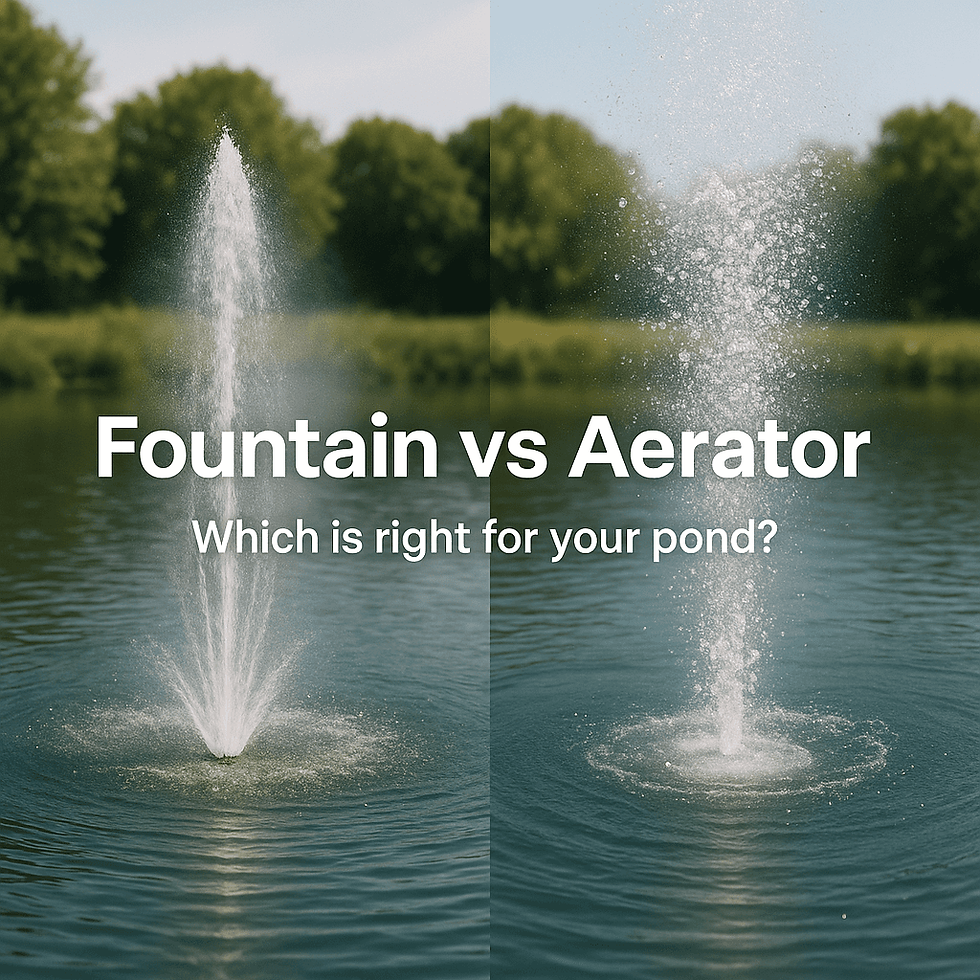
Surface aerators (fountains and mechanical aerators)
These agitate the surface to add oxygen and create some movement.
Why they are popular:
Immediate surface oxygenation
Aesthetic benefit if it is a fountain style
Useful for targeted areas like near docks or inflow points
One thing to know: fountains can look great, but they do not always fix low oxygen at the bottom. Many ponds need bottom-up mixing to address muck and deep-water oxygen issues.
What aeration will not fix by itself
Aeration is powerful, but it is not a standalone cure for every pond issue. You may still need to address:
Nutrient sources from runoff, fertilizer, or waterfowl
Shoreline erosion and sediment inflow
Invasive aquatic weeds
Extremely shallow ponds that heat up fast
Severe legacy sediment (where dredging may be required)
The best results usually come from pairing aeration with a broader management plan, even if it is a simple one.
Getting aeration right matters (design is everything)
This is the part many people miss. Aeration is not just “buy a kit and toss it in.”
For Florida lakes and ponds, proper design should consider:
Pond surface area, average depth, and maximum depth
Basin shape, coves, and dead spots
Existing water quality issues (algae type, odor, fish health)
Power availability and placement
Safety, noise considerations, and maintenance access
An undersized system might not circulate enough water to make a difference. An oversized or poorly ramped system can stir up sediments too aggressively in the beginning. A thoughtful setup, installed and started correctly, is what delivers the steady improvements people expect.
The bottom line
Aeration is one of the best long-term investments you can make for a Florida lake or pond. It improves dissolved oxygen, reduces stagnation, supports healthier fish, helps control odors, and creates better conditions for clearer water and more stable ecology.
If you want help choosing the right aeration approach for your specific site, Gulf Coast Aquatics can take a look and recommend a system that matches your pond’s size, depth, and goals. With 30 years of experience managing lakes and ponds along Florida’s Gulf Coast, they can also provide a straightforward estimate, including installation and ongoing maintenance options.
If you would like, you can request a quote from Gulf Coast Aquatics and get a clear plan and price based on your pond, not a generic package.