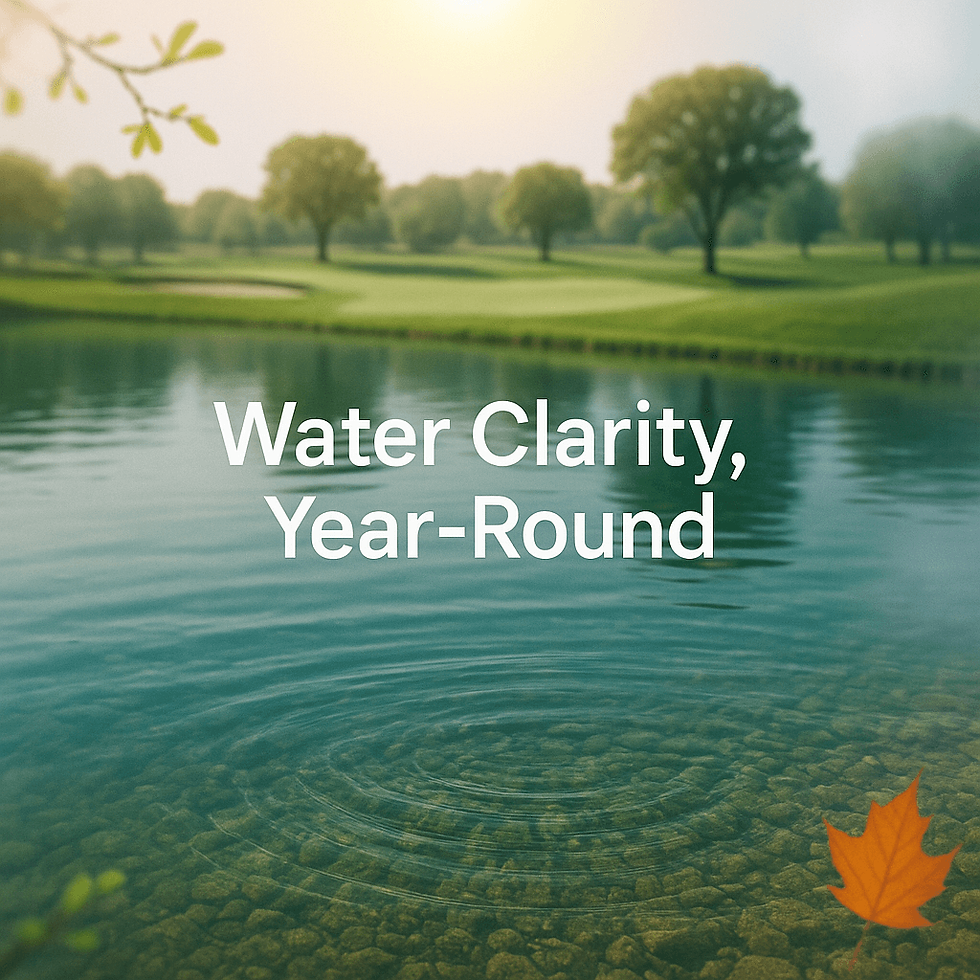
How Pond Dye Improves Water Quality and Aesthetics
Updated: May 13
If you manage a pond or small lake in Florida, you already know the struggle. One month the water looks clear and inviting. The next, it turns into a pea soup mess, weeds start creeping in from the edges, and the whole shoreline just feels… neglected.
Pond dye is one of those simple tools that can make a pond look better fast, but it is also more than “just color.” When it is used correctly, pond dye can support better water quality by helping control sunlight, which is one of the main drivers behind algae blooms and excessive aquatic plant growth.
Let’s break down what pond dye does, how it works, what it helps with, and when it is worth using (and when it is not).
What is pond dye, exactly?
Pond dye is a concentrated colorant designed specifically for lakes and ponds. Most products come in blue, teal, black, or a “blue-black” blend. You apply it directly to the water, it disperses, and within a few hours to a day, the pond takes on a deeper, more uniform color.
It is important to clarify something right away. Pond dye is not paint. It does not coat fish, plants, fountains, or rocks. It is a water-soluble dye that stays in the water column and gradually fades over time, especially after heavy rainfall, water exchanges, or strong UV exposure.
The core idea: dye reduces sunlight penetration
Nearly every water-quality benefit of pond dye comes from one thing: it limits how much sunlight penetrates into the water.
Sunlight is fuel for photosynthesis. In ponds, that photosynthesis shows up as:
Planktonic algae (the floating algae that turns water green)
Filamentous algae (the stringy mats that cling to edges and float on top)
Submerged weeds (hydrilla, eelgrass, pondweed, and similar plants)
Some emergent growth near shorelines in shallow areas
By shading the water, pond dye can slow down the growth cycle of algae and plants, especially in clear ponds where light reaches the bottom.
How pond dye can improve water quality
Pond dye is not a replacement for professional lake management, nutrient control, aeration, or targeted herbicide and algaecide programs. But it can support water quality in a few real, practical ways.
1) Helps reduce algae blooms (by limiting light)
Algae needs nutrients and sunlight. You might not be able to instantly remove nutrients like phosphorus and nitrogen from a pond, especially if they are constantly washing in from fertilizer runoff, stormwater, or waterfowl. But you can reduce the sunlight side of the equation.
When algae receives less light:
It grows more slowly
Blooms can be less intense
The water tends to look more stable week to week
This is especially helpful during warm months along Florida’s Gulf Coast, when sunlight and water temperatures push algae growth into overdrive.
2) Can help suppress submerged weed growth in deeper areas
Submerged plants often explode when sunlight reaches the pond bottom. Dye makes it harder for light to reach deeper zones, which can reduce weed growth in areas that are right on the edge of “plant-friendly depth.”
A simple way to think about it is this: dye does not usually eliminate weeds, but it can help prevent a pond from turning into an underwater lawn.
That said, dye is less effective in very shallow ponds where sunlight will reach the bottom anyway.
3) Supports more consistent dissolved oxygen conditions (indirectly)
This one is easy to misunderstand, so let’s keep it realistic.
Pond dye does not directly oxygenate water. But by reducing extreme algae swings, it can help reduce the risk of a classic pond problem:
Algae blooms hard for days or weeks
Then it crashes (often after weather changes or treatments)
The decay process consumes oxygen
Fish become stressed or, in severe cases, fish kills occur
By helping limit the intensity of blooms in the first place, dye can be part of a broader plan to keep the pond more balanced.
4) Helps manage water temperature in some cases
Because dye changes how light behaves in the water, it can slightly influence thermal patterns, especially in smaller ponds. The results vary by depth, pond shape, and circulation, so do not expect miracles, but many pond owners notice the water “acts” more stable during high sun months.
The aesthetics: why pond dye makes ponds look “healthier”
Even if your main goal is water quality, the visual improvement matters because it changes how people perceive the pond.
A dyed pond usually looks:
Darker and cleaner
More uniform (less patchy green or brown)
More reflective (sky and landscaping reflect nicely)
More “finished” from a curb appeal standpoint
This is a big deal for communities, golf courses, commercial properties, and homeowner associations where the pond is part of the overall landscape design.
Hides the “ugly stage” while other management steps take effect
Many water quality fixes take time. Reducing nutrients, improving circulation, adjusting treatments, or reworking shoreline vegetation does not always give instant results.
Pond dye can improve appearance quickly while longer-term solutions are underway, so the pond doesn’t look like a project in progress for months.
What pond dye does not do (important)
Pond dye has real benefits, but it also gets oversold online. Here are common misconceptions.
It does not remove nutrients
If fertilizer runoff or stormwater is feeding the pond, dye won’t stop nutrients from entering. It can reduce the symptoms (algae growth) by limiting light, but nutrient sources still matter.
It does not fix muck buildup
If your pond has years of organic sludge on the bottom, dye won’t break that down. That requires a different plan, often involving beneficial bacteria, dredging, aeration, or a combination.
It does not replace aeration
Aeration improves oxygen levels and circulation. Dye does not.
It does not eliminate existing weeds overnight
Dye is preventative and suppressive. If hydrilla is already dense, you will likely need targeted treatment and a longer-term weed management approach.
When pond dye works best
Pond dye tends to perform best when conditions match its strengths.
Clear water, lots of sunlight
If your pond is clear enough that you can see several feet down, dye can make a noticeable difference because it reduces deep light penetration.
Ponds with recurring algae issues
If your pond blooms frequently in warm months, dye can help reduce how aggressive the bloom becomes.
Ponds managed for aesthetics
If your top priority is making the pond look dark, clean, and “high-end,” dye is one of the easiest upgrades.
As part of an overall management plan
Dye works best when paired with things like shoreline buffer improvements, nutrient management, aeration, and professional algae and weed control.
When pond dye is less effective (or not the right move)
Very shallow ponds
If most of the pond is shallow enough that sunlight still hits bottom easily, dye may not provide much weed suppression.
Heavy inflow or frequent water exchange
If your pond gets flushed often by runoff, stormwater, or flow-through design, dye may dilute quickly and require frequent reapplication.
Ponds with severe algae mats already present
Dye won’t “clear” an existing mat. It can help prevent regrowth after removal or treatment, but it is not a clean-up tool by itself.
Where specific water-use needs matter
If the pond is used for irrigation, livestock, or other specific purposes, you should confirm compatibility and any local guidelines. A professional can help you choose the right product and dosing approach.
Is pond dye safe for fish, pets, and wildlife?
Most pond dyes on the market are made for ornamental and managed ponds and are commonly used where fish and wildlife are present. Still, safety depends on applying the right product at the right dose and following the label.
A few practical tips:
Use pond-specific dye products, not general-purpose dyes
Apply based on the pond’s approximate volume, not guesswork
Reapply after major rainfall events if dilution occurs
Keep records of when and how much you add
If you manage a community pond, HOA lake, or a larger waterbody, having a pro handle dosing and timing usually saves money over trial-and-error, especially in Florida where rainy season can change conditions fast.
Getting the best results: basic application and timing tips
You do not need to overcomplicate pond dye, but timing does matter.
Apply early in the growth season when possible
Dye works best as a preventative tool. Applying before algae and weeds ramp up gives you more control.
Reapply after heavy rains or water exchanges
Florida storms can dilute ponds quickly. If the color fades noticeably, effectiveness fades with it.
Combine with smart shoreline practices
If you have bare, eroding edges or fertilizer-heavy turf right up to the shoreline, nutrients will keep pouring in. Even a small buffer zone can make a difference.
Watch your pond’s “problem zones”
Most ponds have areas that always struggle, like shallow coves, low-flow corners, or spots that collect runoff. Dye may help overall, but those zones often need targeted management too.
A practical example: what dye can realistically do for a Florida pond
For many Florida Gulf Coast ponds, the real-world win looks like this:
The pond shifts from bright green or brown to a deeper, cleaner blue/teal tone
Algae still exists (it always will), but blooms are less frequent or less intense
Submerged weeds don’t spread as aggressively into deeper water
The pond looks more consistent, which matters for property value and curb appeal
It is not a magic fix, but it is one of the simplest upgrades that can support both appearance and overall management goals.
Want a pond dye plan that actually fits your pond?
Every pond is a little different. Depth, runoff, existing weed pressure, aeration, fish load, and seasonal rainfall all affect how well dye works and how often it should be applied.
If you want a straightforward recommendation and dosing plan, Gulf Coast Aquatics can help. With 30 years of experience managing lakes and ponds along Florida’s Gulf Coast, they can look at your pond’s conditions and give you a quote for a practical, results-focused plan that may include dye as part of the bigger picture.
If you’d like, reach out to Gulf Coast Aquatics for a quick quote and recommendations based on your specific pond.