Cost to Install a Pond Fountain in Florida (2026 Pricing Guide)
- May 12
- 6 min read
Updated: May 13
If you live in Florida, you already know ponds can go from “nice backyard feature” to “why does it smell like that?” pretty fast.
A pond fountain is one of the simplest upgrades you can make. It keeps water moving, helps with oxygen levels, improves the look of the pond, and can reduce the conditions that lead to algae and fish stress.
But what does it actually cost to install a pond fountain in Florida in 2026?
This guide breaks down real-world price ranges, what changes the price, and what to expect if you’re installing a fountain on a backyard pond, community pond, or small lake along Florida’s Gulf Coast.
Typical pond fountain installation cost in Florida (2026)
Most Florida installations land in one of these ranges:
Small residential pond (plug-in, basic fountain): $1,200 to $3,500
Mid-size pond (higher spray, better components, pro install): $3,500 to $8,500
HOA/community pond or small lake fountain system: $8,500 to $25,000+
Large lake, multiple units, electrical upgrades, permitting: $25,000 to $75,000+
Those numbers can shift a lot depending on power access, pond depth, fountain type, and whether you need electrical work, anchoring, or a more robust unit to handle wind and salt air near the coast.
What you’re paying for (the real cost breakdown)
A pond fountain install is not just “buy fountain, toss in water.”
Here’s where your money typically goes.
1) The fountain unit itself
This is the main cost driver.
Typical 2026 fountain equipment pricing in Florida:
Entry-level (small pond, basic patterns): $600 to $2,000
Mid-grade (stronger motor, multiple nozzles, better warranty): $2,000 to $6,000
Commercial grade (HOA lakes, larger spray, continuous duty): $6,000 to $20,000+
In Florida, it’s usually worth leaning toward a better-built unit if your pond runs year-round. Heat, storms, and organic load can punish cheaper systems.
2) Electrical and power delivery (often the surprise cost)
If you already have a safe, correctly sized outdoor circuit near the pond, you may be in good shape.
If not, electrical can become a major part of the budget.
Common electrical cost ranges:
Existing GFCI outlet nearby (minor work only): $0 to $400
New dedicated circuit + trenching a short run: $800 to $2,500
Long trench runs, panel upgrades, commercial power setup: $2,500 to $10,000+
Florida soil, setbacks, existing landscaping, pavers, and distance from the panel all matter here. The longer the run, the higher the cost.
3) Cabling, mooring, and hardware
A fountain has to stay where you put it and survive storms.
Typical costs include:
Power cable length and gauge
Anchoring or mooring kit
Bottom weights or shoreline anchors
Protective conduit in certain installs
Typical range: $200 to $1,500+ depending on pond size and install method.
4) Installation labor
Professional installation typically includes setup, placement, float/assembly, mooring, startup testing, and basic adjustments.
Typical labor range:
Small pond: $400 to $1,500
Mid-size pond: $1,500 to $3,500
Large pond/lake installs: $3,500 to $10,000+
If access is difficult (no shoreline access, steep banks, heavy vegetation), labor goes up.
5) Extras that add cost but often make the system better
These are optional, but common in Florida:
LED fountain lights: $300 to $3,000+
Timer or smart controller: $150 to $800
Remote shutoff / control panel upgrades: $300 to $2,000+
Surge protection (recommended): $150 to $600
Aeration add-ons or separate diffused aeration system: $2,000 to $15,000+
A quick note: fountains help with aeration, but they are not always a full replacement for a bottom-diffused aeration system if you’re dealing with deeper water or serious water quality issues.
Installation examples (what Florida homeowners and HOAs actually spend)
To make the pricing feel more real, here are common scenarios.
Example 1: Small backyard pond (simple plug-in fountain)
Fountain equipment: $900 to $1,800
Minor electrical/GFCI: $150 to $400
Labor + anchoring: $400 to $900Estimated total: $1,450 to $3,100
Best for: decorative ponds where the goal is movement, sound, and a cleaner look.
Example 2: Mid-size pond near the home (better spray height, pro install)
Fountain equipment: $2,500 to $5,500
Electrical trenching and dedicated circuit: $1,000 to $2,500
Mooring/cable management: $300 to $900
Labor: $1,200 to $2,800Estimated total: $5,000 to $11,700
Best for: ponds that get algae pressure in summer and need stronger circulation.
Example 3: HOA/community pond (commercial-grade fountain + lights)
Fountain equipment: $7,000 to $18,000
Electrical + long run + controls: $2,500 to $8,000
Lighting kit: $1,000 to $3,500
Labor + equipment deployment: $3,000 to $7,500Estimated total: $13,500 to $37,000
Best for: visibility, curb appeal, and steady operation.
What impacts pond fountain cost the most in Florida?
Distance to power
This is the big one. If the pond is far from a power source, trenching and wire sizing can add thousands.
Pond size and depth
Larger ponds usually need:
higher horsepower
stronger floats
more robust anchoring
longer cable runs
Depth matters too. If the pond is deep enough to stratify (common in Florida retention ponds), a fountain alone may not fully address oxygen levels at the bottom.
Wind and spray considerations
Florida breezes can push spray onto walkways, roads, lanais, and nearby landscaping.
That affects:
which nozzle pattern you can use
how high you can run the spray
where the unit should be placed
Sometimes the “coolest looking” pattern is not the one you can actually use without making a mess.
Freshwater vs brackish/coastal exposure
Along parts of Florida’s Gulf Coast, airborne salt and brackish conditions can increase corrosion risk.
That may push you toward:
higher-grade materials
better seals and hardware
more frequent maintenance routines
Permitting and compliance (especially for HOAs and public-facing ponds)
Some installs need coordination with:
HOA boards and vendors
local electrical inspection requirements
stormwater pond rules in certain communities
Not every job requires permits, but when they do, timeline and admin costs can rise.
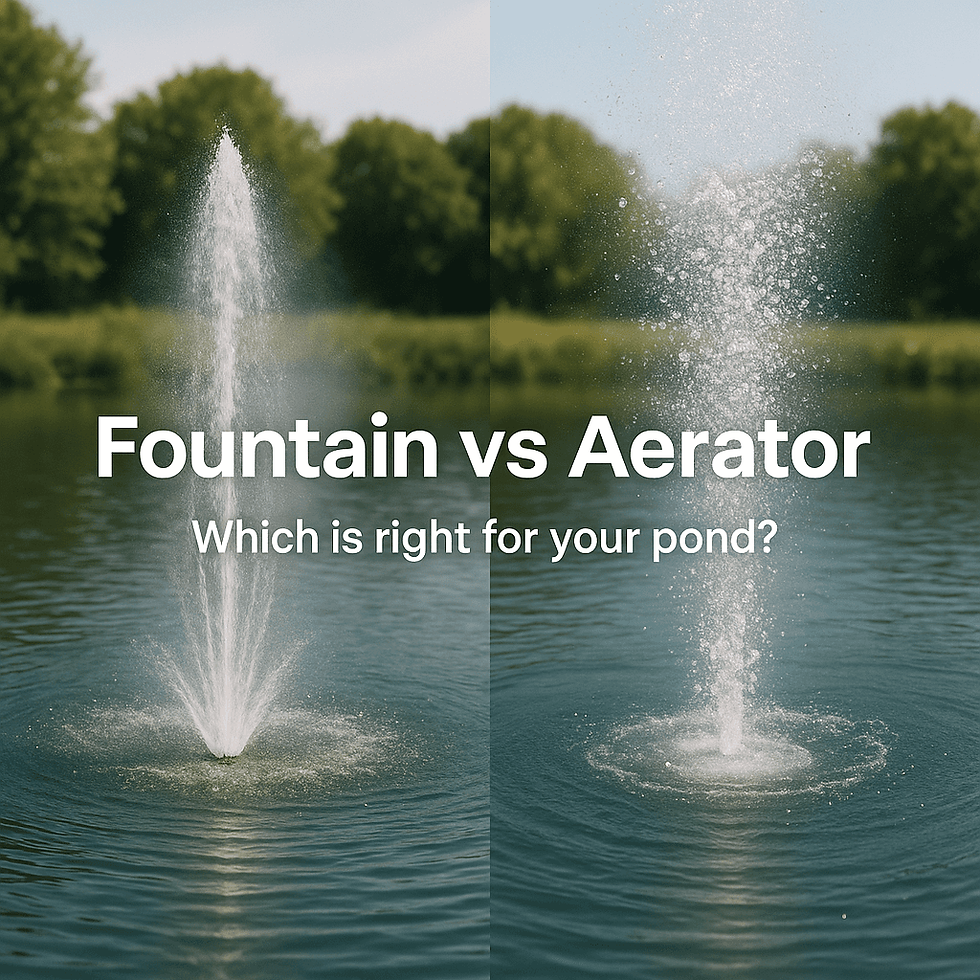
Fountain vs aerator: are you buying the right thing?
A lot of people buy a fountain expecting it to “fix” the pond.
A fountain primarily:
improves surface agitation
adds oxygen at the surface
boosts aesthetics
helps reduce stagnant zones near the top
A bottom-diffused aeration system primarily:
moves and oxygenates deeper water
reduces stratification
can improve overall pond health more effectively in deeper ponds
In many Florida ponds, especially retention ponds, the best setup is:
a fountain for looks
aeration for water quality
If you are dealing with recurring fish kills, heavy muck, or persistent foul odor, it’s worth getting the pond evaluated instead of guessing.
Ongoing costs you should budget for (ownership cost in Florida)
Electricity
Power cost depends on horsepower, runtime, and your electric rate.
As a ballpark:
Small units (1/2 HP range) running evenings only: often $15 to $45/month
Larger units running longer hours: often $50 to $200+/month
If you run it 24/7, expect higher bills, especially with larger horsepower.
Maintenance
At minimum, plan for periodic:
intake screen cleaning
nozzle cleaning
checking mooring lines and cable condition
inspecting for wear after storms
Typical maintenance costs:
DIY basic upkeep: $0 to $200/year
Professional service visits: $200 to $800/year (or more for larger systems)
Repairs and replacement parts
Over time, you may need:
seals
impellers
lighting components
control boxes
power cords
Florida storms and lightning are real risks, so surge protection is usually money well spent.
How to save money without regretting it later
Here are the smartest ways to keep costs under control.
Keep the power run short
If you can place the unit closer to an existing safe power source, you can sometimes save thousands in trenching and heavy gauge wire.
Don’t overspend on spray height
Very tall patterns look great until wind pushes water everywhere. A slightly lower, fuller pattern often looks better and behaves better.
Choose quality where it matters
Saving $800 up front can cost more later if you’re replacing parts early, dealing with downtime, or constantly cleaning a unit that is not sized for your pond.
Plan for storms
Ask about:
proper anchoring
cable slack and protection
quick shutoff options
post-storm inspection
The cheapest install is not the same as the most secure install.
Questions to ask before you install a pond fountain
Use these to avoid most “wish I knew that earlier” issues:
Is the fountain sized for my pond’s dimensions and typical summer conditions?
How far is the power source, and what electrical work is required?
What spray patterns are realistic with local wind and nearby homes/walkways?
What’s the warranty, and who handles service locally?
How is it anchored, and how does it hold up in storms?
Do I need a fountain, aeration, or both?
What is the estimated monthly electricity cost at my runtime schedule?
A Florida-specific note on timing: when to install
In many parts of Florida, installs are easiest when:
water levels are stable
vegetation growth is manageable
you can schedule around storm season
That said, if your pond is already struggling (odor, algae, fish stress), waiting months can make the problem worse. A quick site visit can usually tell you what’s realistic.
Need a quote for your pond fountain install?
Pricing depends heavily on your pond size, depth, access, and power situation, so the fastest way to get an accurate number is a site-specific estimate.
Gulf Coast Aquatics has 30 years of experience managing lakes and ponds along Florida’s Gulf Coast, and can recommend the right fountain setup for your waterbody and your budget. If you want, you can reach out for a no-pressure quote and a straightforward recommendation based on what your pond actually needs.